

Paid
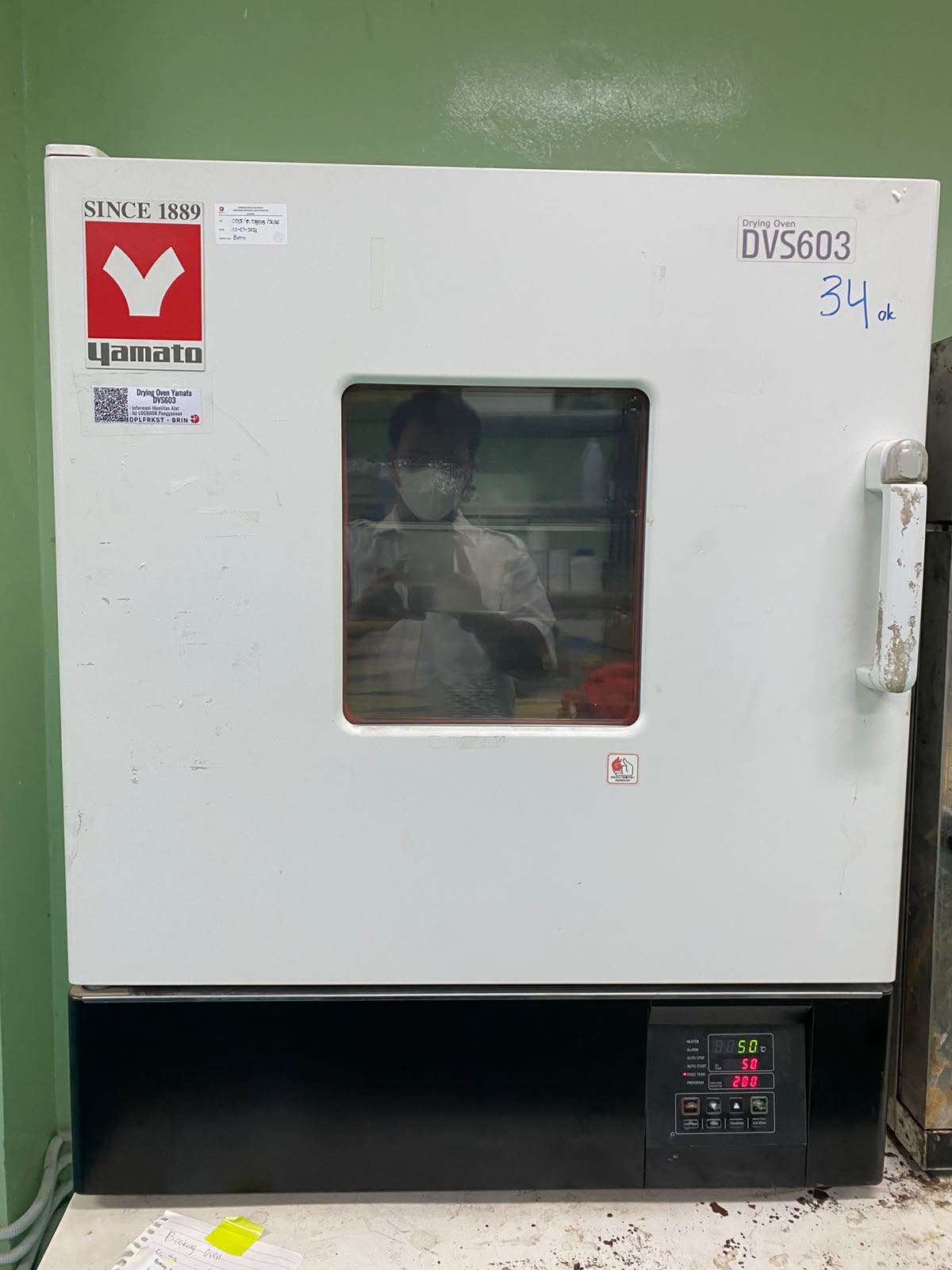
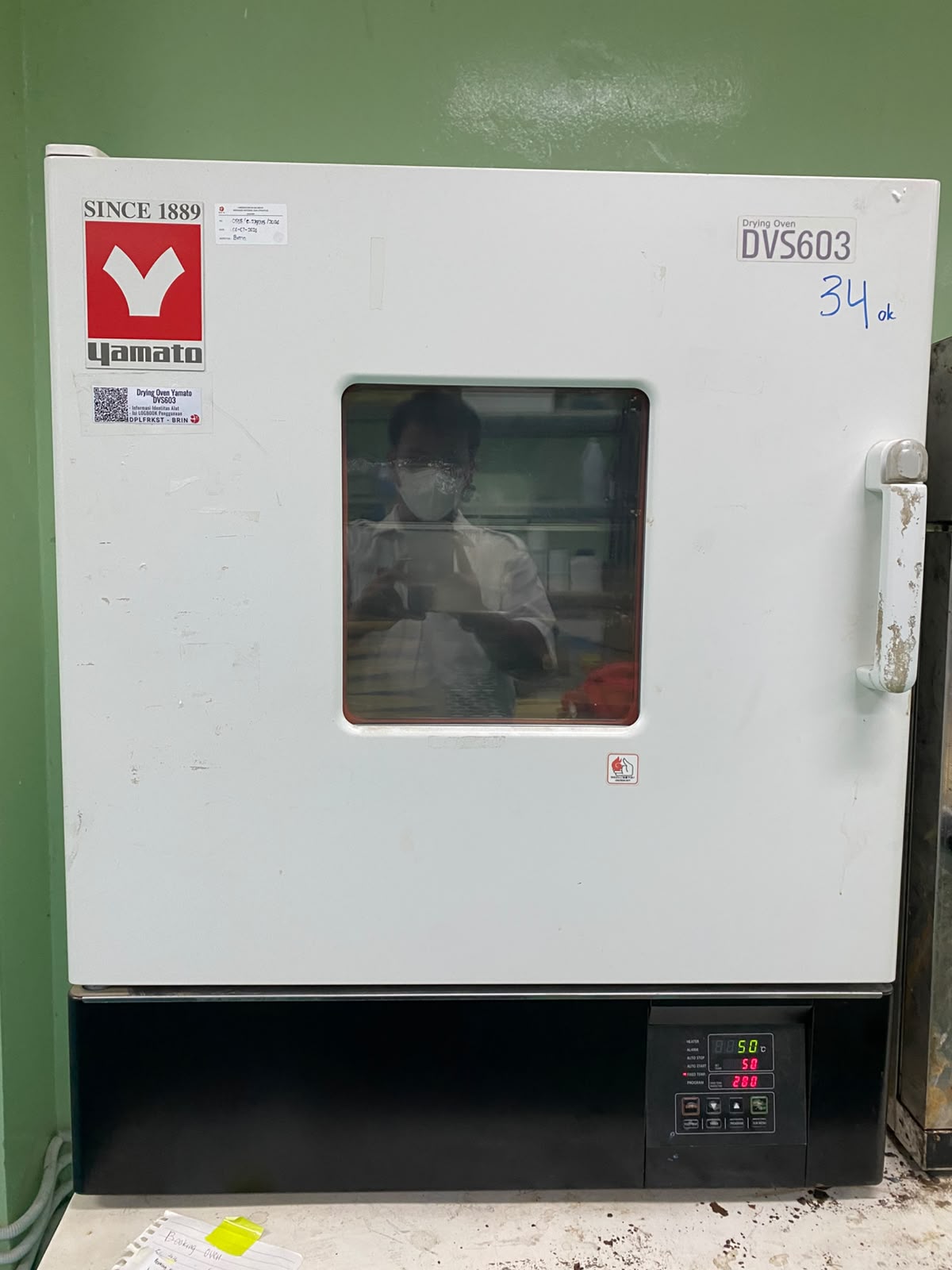
SERVICE DESCRIPTION | DRYING OVEN – YAMATO DVS603 Service Description This service is suitable for drying biomass, powders, solid materials, and other samples compatible with the equipment's characteristics and operating limits. Service Use of the Yamato DVS603 Drying…
- iLaB (Integrated Laboratory of Bioproducts) - ORNM
- KST Cibinong (Soekarno)
KST Ir Soekarno - 087884931709
- maya007@brin.go.id
Marketing Office
Deputi Bidang Infrastruktur Riset dan Inovasi BRIN
-
DRYING OVEN – YAMATO DVS603
Service Description
This service is suitable for drying biomass, powders, solid materials, and other samples compatible with the equipment's characteristics and operating limits.
Service
Use of the Yamato DVS603 Drying Oven for sample drying and heating at temperatures ranging from 100–200°C, with the processing time and conditions determined according to the user's requirements and sample suitability.
Service Specifications
- Equipment Name: Drying Oven
- Brand/Model: Yamato DVS603
- Function: Sample drying, heating, and thermal treatment
- Service Temperature Range: 100–200°C
- Sample Types: Biomass, powders, solid materials, and other materials suitable for heating
- Sample Preparation: Performed by the user and not included in the service
- Sample Containers: Provided by the user and must be heat-resistant and compatible with the processing conditions
- Processing Parameters: Temperature and heating duration are determined according to the user's requirements and sample characteristics
- Service Output: Dried samples or samples that have undergone heat treatment
- Operation: Conducted in accordance with the Standard Operating Procedure (SOP) and under the supervision of the Equipment Person in Charge (PIC)
- Users must provide information about the sample type, quantity, processing temperature, heating duration, and intended purpose when submitting a service request.
- The service operating temperature must be within the range of 100–200°C.
- Users must ensure that their samples are suitable for heating at the requested temperature.
- Users must provide heat-resistant sample containers compatible with the materials being processed.
- Samples must be placed securely and must not exceed the capacity of the oven chamber.
- Flammable, explosive, or potentially toxic, corrosive, or hazardous gas/vapor-generating samples are not permitted without a risk assessment and approval from the PIC.
- Samples containing solvents or volatile substances must be declared to the PIC before processing.
- Users must comply with the equipment SOP and all laboratory safety instructions.
- Equipment use must follow the approved service schedule.
- Users are responsible for the suitability, safety, and proper handling of their samples.
- Users must wear appropriate personal protective equipment (PPE) throughout the process.
- Do not place flammable, explosive, or hazardous gas/vapor-generating materials in the oven without prior risk assessment and approval from the PIC.
- Do not use the oven to evaporate flammable solvents unless the specific application has been assessed as safe and approved in accordance with laboratory procedures.
- Do not place samples directly on the oven chamber surfaces when sample containers are required.
- Use heat-resistant gloves and appropriate handling tools when loading or removing hot samples.
- Do not touch the oven interior or samples until they have reached a safe handling temperature.
- Do not obstruct air circulation inside the oven by overcrowding or improperly arranging samples.
- If unusual odors, smoke, equipment malfunctions, or other hazardous conditions occur, immediately notify the PIC and stop the process if it is safe to do so.
- Users must not modify safety settings, dismantle, or repair the equipment without authorization from the PIC.
- Users must clean their sample containers and the work area after completing the process.
- Ensure that the oven chamber is free of spills, sample residues, and contaminants.
- The oven interior may only be cleaned after the equipment has cooled to a safe temperature.
- Use appropriate cleaning methods to avoid damaging the oven's surfaces or components.
- Sample residues and waste must be handled and disposed of in accordance with laboratory waste-management procedures.
- Any equipment damage, contamination, or abnormal operating conditions must be reported to the PIC.
- Users are responsible for ensuring that the work area is clean and the equipment is left in a safe condition after use.