
SERVICE DESCRIPTION | ELECTROSPINNING Service Description Electrospinning is a technique used to produce micro- to nanoscale fibers from polymer solutions capable of forming a stable jet and Taylor cone under a high-voltage electric field. The resulting fibers can be used…
- iLaB (Integrated Laboratory of Bioproducts) - ORNM
- KST Cibinong (Soekarno)
KST Ir Soekarno - 087884931709
- maya007@brin.go.id
Service Description
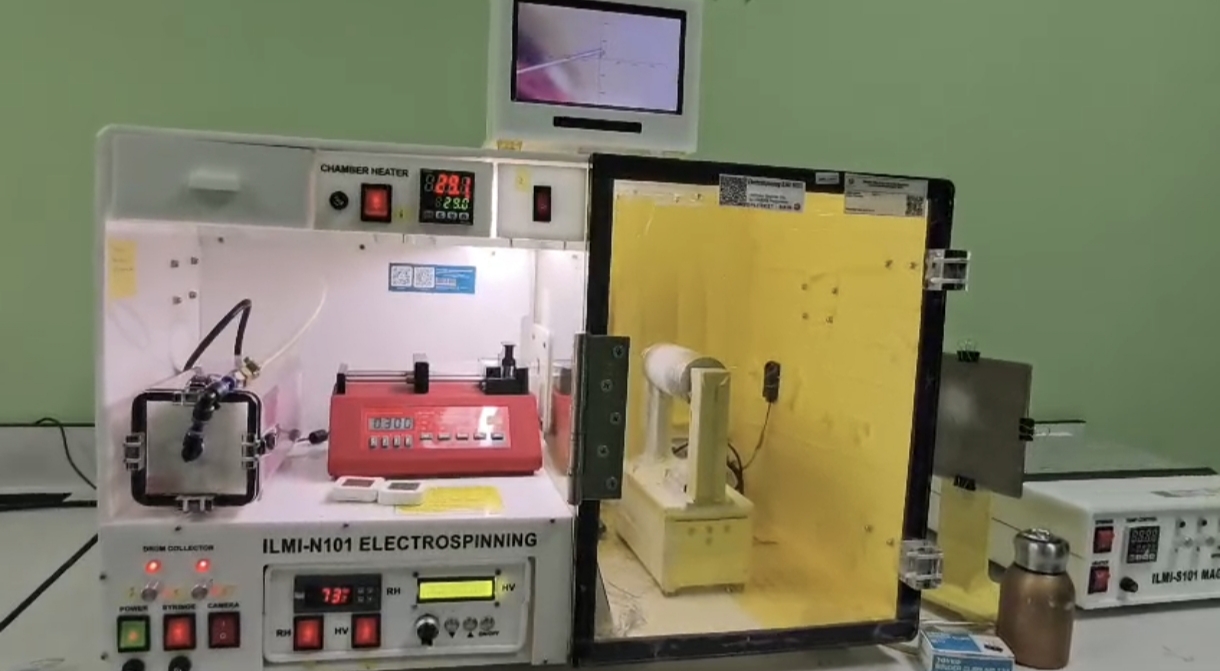
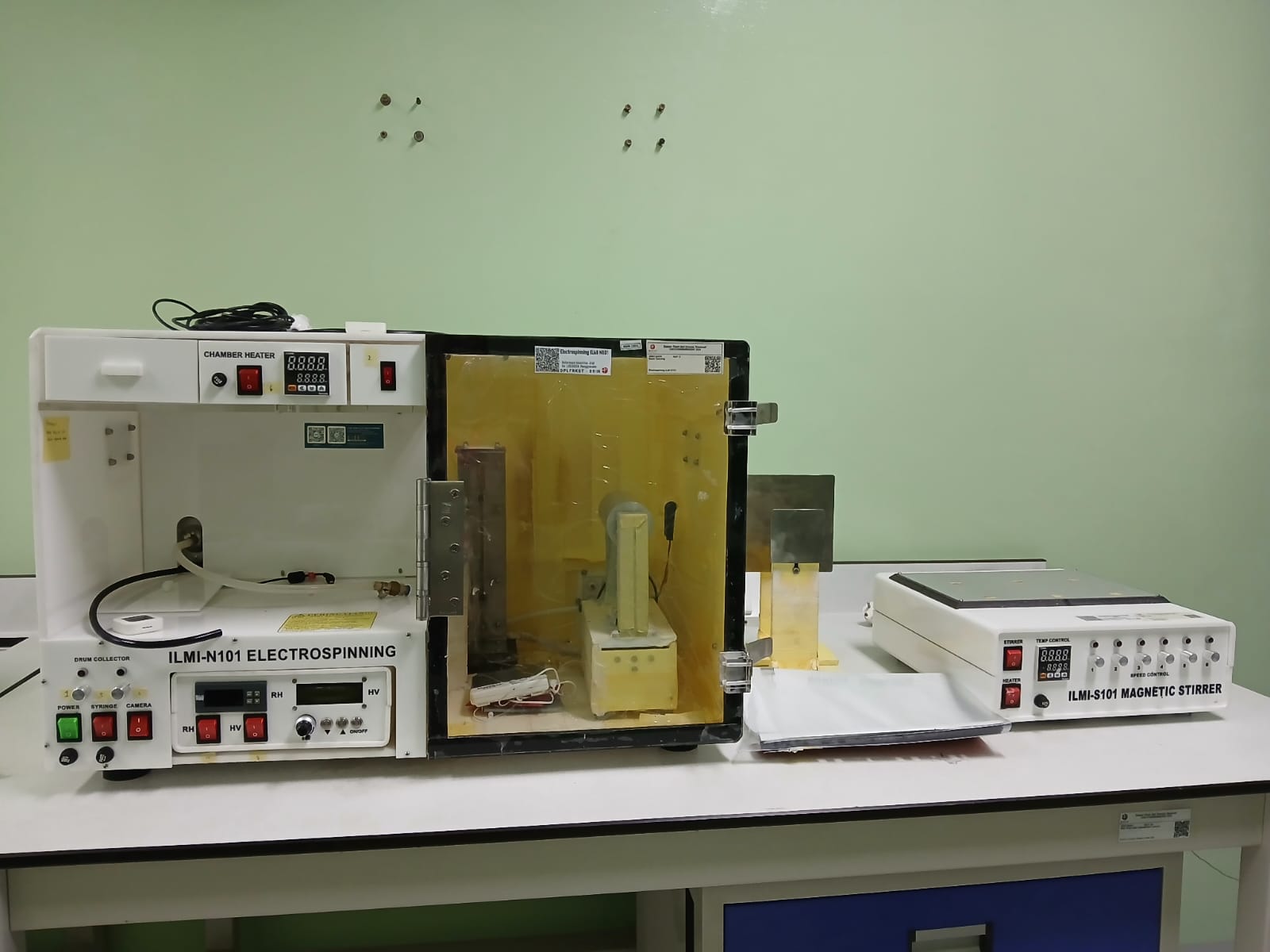
Electrospinning is a technique used to produce micro- to nanoscale fibers from polymer solutions capable of forming a stable jet and Taylor cone under a high-voltage electric field. The resulting fibers can be used for various applications, including biomaterials, filtration, drug delivery, sensors, tissue engineering, and functional packaging materials.
Types of Materials/Solutions That Can Be SubmittedThe following polymer systems may be submitted for electrospinning, provided that the solution is homogeneous, stable, compatible with the equipment, and meets applicable laboratory safety requirements:
- PVA (Polyvinyl Alcohol): Water/aquaeous-based systems or other compatible solvent systems.
- PVDF (Polyvinylidene Fluoride): Commonly processed using DMF, DMAc, acetone, or suitable solvent mixtures.
- PAN (Polyacrylonitrile): Commonly dissolved in DMF or DMAc and widely used as a precursor for carbon fibers. It may be processed provided that the solution is homogeneous, stable, and meets laboratory safety requirements.
- Nylon-6: May be processed using formic acid or other compatible solvent systems.
- Cellulose Acetate: Commonly processed using acetone with DMAc/DMF or other suitable solvent systems.
- Chitosan: Generally processed using acetic acid and often combined with supporting polymers such as PVA.
- PLA (Polylactic Acid): May be processed provided that the PLA is completely dissolved and the solvent system and processing parameters comply with equipment specifications and laboratory safety requirements. Solvent systems commonly reported in the literature include chloroform/DMF and DCM/DMF.
- The solution must be homogeneous and free from coarse particles or aggregates that could clog the needle or damage the syringe/pump system.
- The viscosity must be appropriate: excessively low viscosity may result in electrospraying or bead formation, while excessively high viscosity may cause unstable flow or needle clogging.
- The electrical conductivity and surface tension must be suitable for the formation of a stable Taylor cone and continuous jet.
- The polymer must be completely dissolved. Solutions showing precipitation, uncontrolled gelation, aggregation, or phase separation may be rejected.
- The solvent must be compatible with the syringe, tubing, needle, seals, collector, and other equipment components that come into contact with the material.
- The solution volume must be appropriate for the intended experiment and the capacity of the syringe being used. The actual allowable volume will be determined following verification by the Equipment Operator (EO).
- Users must provide the polymer name, polymer concentration, solvent composition, and the SDS/MSDS for each solvent and additive used.
- Volatile, flammable, toxic, corrosive, or halogenated solvents (e.g., DCM and chloroform) may only be used following risk assessment and approval by the Equipment Operator (EO) and/or Laboratory Supervisor, with adequate ventilation/fume extraction.
- DMF requires particular attention due to potential inhalation and skin exposure. Its use must comply with the applicable SDS, personal protective equipment (PPE), and laboratory ventilation requirements.
- Solutions containing biologically active materials, hazardous nanoparticles, highly toxic or reactive substances, explosives, radioactive materials, or prohibited substances require special approval and may be rejected in accordance with facility policies.
- Polymer solutions and solvent waste must be collected separately according to the applicable hazardous waste (B3) categories and must not be discharged into the sink.
- The equipment may only be used during the laboratory service hours. The actual schedule is subject to equipment availability and the Equipment Operator (EO).
- Users must specify the requested usage time/session in the ELSA application description according to the approved schedule.
- The actual operation must follow the approved schedule. Any schedule changes must be communicated to the EO/verifier.
- Applications that do not provide information regarding the polymer solution identity, solvent, concentration, and intended use may be returned for completion or rejected.
- The sample/solution name and quantity stated in ELSA must correspond to the information provided in the service form.
- Preparation of the polymer solution is generally the responsibility of the user, unless solution preparation is available as a separate service and has been agreed upon in advance.
- Equipment operation must be conducted under the supervision of the Equipment Operator (EO). Users are not permitted to modify safety-related parameters, open the equipment enclosure, or handle high-voltage components without EO authorization.
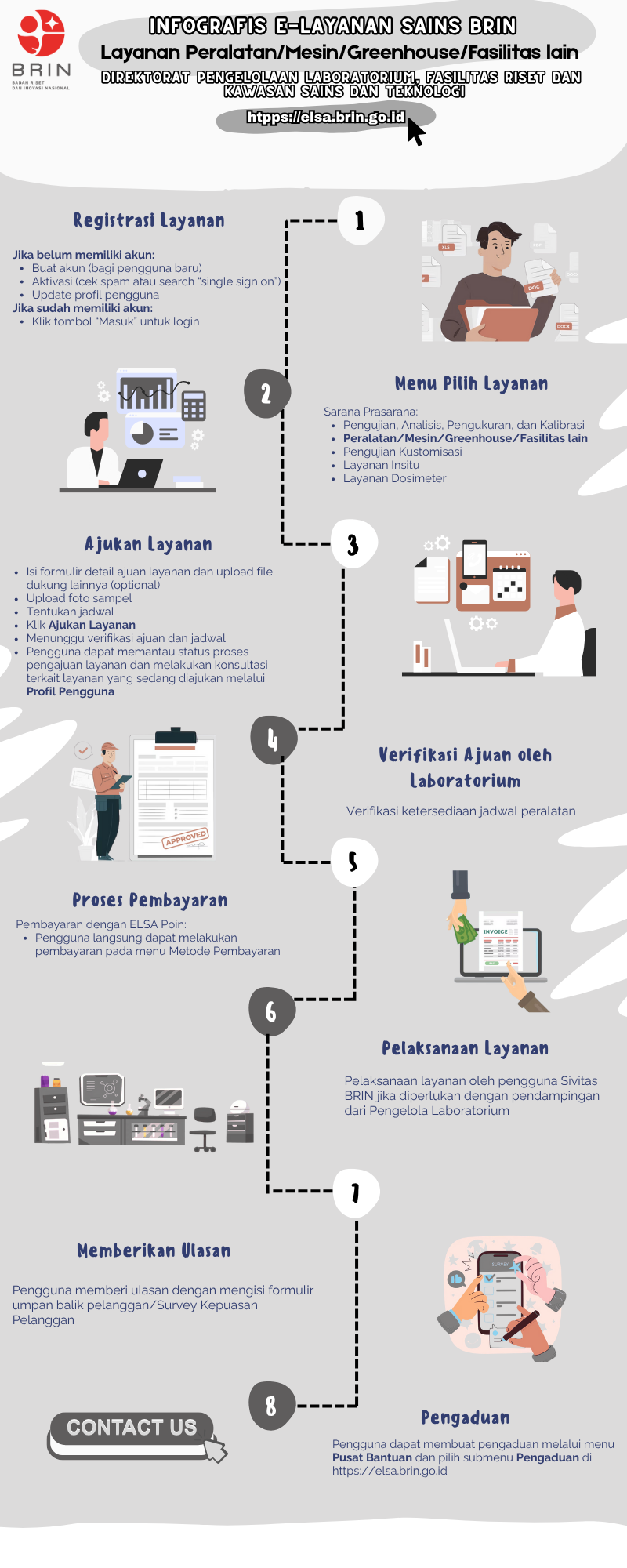
- The equipment may only be used after the administrative process and service payment have been completed in accordance with ELSA procedures.
- Process data/records will be provided through the applicable service mechanism. Fiber morphology characterization (e.g., SEM analysis) is not automatically included in the electrospinning service and must be requested as a separate service.