

Free
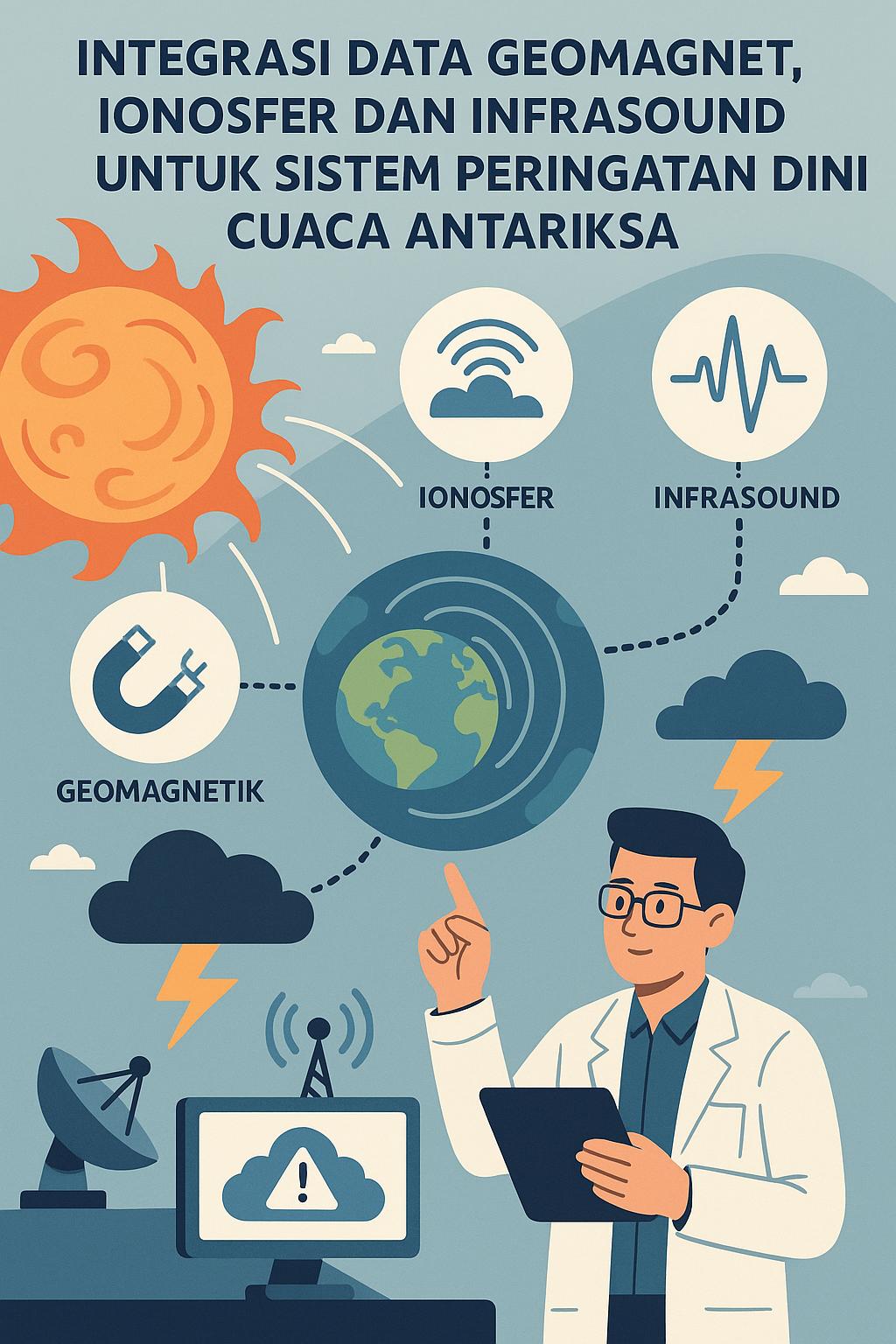
SERVICE DESCRIPTION | Research Topic: Integration of Geomagnetic, Ionospheric, and Infrasound Data for a Space Weather Early Warning System. Scope of Research Topic: 1. Multidisciplinary Correlation Modeling "Temporal-Spatial Correlation of Geomagnetic Disturbances, Ionospheric…
- KST Cisitu (Samaun Samadikun)
Research Topic:
Integration of Geomagnetic, Ionospheric, and Infrasound Data for a Space Weather Early Warning System.
Scope of Research Topic:
1. Multidisciplinary Correlation Modeling
"Temporal-Spatial Correlation of Geomagnetic Disturbances, Ionospheric Fluctuations, and Infrasound Anomalies During Solar Storms"
Analyzing the relationship between geomagnetic indices (Dst, Kp), Total Electron Content (TEC), and infrasound propagation patterns to identify early warning patterns.
"Integration of Machine Learning for Multisensor Data-Based Space Weather Impact Prediction"
Using AI (LSTM, Neural Networks) to predict geomagnetic-ionospheric disturbances from historical solar storm data.
2. Development of a Real-Time Monitoring System
"Design and Construction of an Integrated Sensor Network: Magnetometer, Ionosonde, and Infrasound Array for Rapid Detection of Space Weather Disturbances"
Integrating magnetometer (INTERMAGNET), ionosonde, and infrasound (IMS/CTBTO; BRIN) data into a real-time monitoring system.
"Optimization of Data Fusion Algorithms for Early Warning of Geomagnetic Storms and Ionospheric Scintillation"
Combining satellite data (SWARM, GOES) with ground observations to improve prediction accuracy.
3. Impact on Technology & Mitigation Systems
"Impact of Solar Storms on GNSS Navigation Systems: Analysis of Ionospheric Disturbances and Infrasound-Based Mitigation Solutions"
Examining the relationship between ionospheric scintillation, GPS positioning errors, and infrasound detection as an indicator of disturbances.
"Early Detection of Geomagnetically Induced Currents (GIC) in Power Grids Using Hybrid Geomagnetic-Infrasound Monitoring"
Utilizing infrasound signals as a complement to geomagnetic data to warn of GIC risks.
4. Case Study & Model Validation
"Analysis of Extreme Solar Storm Events (Example: Carrington Event 1859/Halloween Storm 2003) in the Context of Modern Early Warning Systems"
Simulating the impact of extreme solar storms on critical infrastructure today.
"Validation of a Space Weather Predictive Model Using Multi-Instrument Observation Data"
Comparing the results of the Space Weather Modeling Framework (SWMF) model with real-world geomagnetic, ionospheric, and infrasound data.
5. Specific Applications for Indonesia
"Mapping Indonesia's Ionospheric Vulnerability to Solar Storms: Integration of Global Networks Observation Data"
Focusing on the equatorial region's unique ionospheric response to solar storms.
"Development of a Prototype Space Weather Early Warning System for Aviation and Maritime Affairs in Indonesia"
Utilizing geomagnetic-ionospheric data to mitigate HF and GNSS communication disruptions.
Study Programs/Educational Majors:
1. Physics & Geophysics Physics (Earth/Space Physics Concentration)
Understanding the fundamentals of electromagnetism, plasma physics, and the dynamics of energetic particles from the Sun. Geophysics Analysis of geomagnetic, seismic/infrasound data, and ionospheric disturbance modeling. Engineering Physics (Geophysical Instrumentation) Development of magnetometer, infrasound, and ionospheric observation sensors.
2. Astronomy & Astrophysics Astronomy
Study of solar activity (CMEs, flares), solar wind, and their impact on Earth. Astrophysics Modeling plasma physics and Sun-magnetosphere interactions.
3. Electrical Engineering (Telecommunications, Electromagnetics)
Analysis of radio/GNSS signal interference due to the ionosphere and mitigation based on geomagnetic data. Aerospace Engineering: The impact of space weather on aircraft and satellite navigation. Geomatics/Geodesy Engineering: Satellite data processing (TEC, ionospheric scintillation) for early warning systems.
4. Atmospheric & Environmental Science: Meteorology/Climatology
Study of infrasound propagation in the atmosphere and its relationship to geomagnetic disturbances. Oceanic & Atmospheric Science: Modeling the dynamics of the upper atmosphere (thermosphere-ionosphere).
5. Computer Science & Data Science: Computer Science (Artificial Intelligence/Computational Science)
Development of machine learning algorithms (LSTM, neural networks) for space weather prediction. Data Science: Integration of big data from satellites (SWARM, GOES), ground sensors, and observatories.
6. Remote Sensing & Instrumentation Engineering Physics (Instrumentation)
Calibration of infrasound sensors, magnetometers, and ionosondes. Remote Sensing: Analysis of space weather satellite data (NASA/NOAA/ESA).
Student Quota:
8
Work/Internship/Research Location:
KST Cisitu (Samaun Samadikun)
Application Requirements:
Integration of Geomagnetic, Ionospheric, and Infrasound Data for a Space Weather Early Warning System.
Scope of Research Topic:
1. Multidisciplinary Correlation Modeling
"Temporal-Spatial Correlation of Geomagnetic Disturbances, Ionospheric Fluctuations, and Infrasound Anomalies During Solar Storms"
Analyzing the relationship between geomagnetic indices (Dst, Kp), Total Electron Content (TEC), and infrasound propagation patterns to identify early warning patterns.
"Integration of Machine Learning for Multisensor Data-Based Space Weather Impact Prediction"
Using AI (LSTM, Neural Networks) to predict geomagnetic-ionospheric disturbances from historical solar storm data.
2. Development of a Real-Time Monitoring System
"Design and Construction of an Integrated Sensor Network: Magnetometer, Ionosonde, and Infrasound Array for Rapid Detection of Space Weather Disturbances"
Integrating magnetometer (INTERMAGNET), ionosonde, and infrasound (IMS/CTBTO; BRIN) data into a real-time monitoring system.
"Optimization of Data Fusion Algorithms for Early Warning of Geomagnetic Storms and Ionospheric Scintillation"
Combining satellite data (SWARM, GOES) with ground observations to improve prediction accuracy.
3. Impact on Technology & Mitigation Systems
"Impact of Solar Storms on GNSS Navigation Systems: Analysis of Ionospheric Disturbances and Infrasound-Based Mitigation Solutions"
Examining the relationship between ionospheric scintillation, GPS positioning errors, and infrasound detection as an indicator of disturbances.
"Early Detection of Geomagnetically Induced Currents (GIC) in Power Grids Using Hybrid Geomagnetic-Infrasound Monitoring"
Utilizing infrasound signals as a complement to geomagnetic data to warn of GIC risks.
4. Case Study & Model Validation
"Analysis of Extreme Solar Storm Events (Example: Carrington Event 1859/Halloween Storm 2003) in the Context of Modern Early Warning Systems"
Simulating the impact of extreme solar storms on critical infrastructure today.
"Validation of a Space Weather Predictive Model Using Multi-Instrument Observation Data"
Comparing the results of the Space Weather Modeling Framework (SWMF) model with real-world geomagnetic, ionospheric, and infrasound data.
5. Specific Applications for Indonesia
"Mapping Indonesia's Ionospheric Vulnerability to Solar Storms: Integration of Global Networks Observation Data"
Focusing on the equatorial region's unique ionospheric response to solar storms.
"Development of a Prototype Space Weather Early Warning System for Aviation and Maritime Affairs in Indonesia"
Utilizing geomagnetic-ionospheric data to mitigate HF and GNSS communication disruptions.
Study Programs/Educational Majors:
1. Physics & Geophysics Physics (Earth/Space Physics Concentration)
Understanding the fundamentals of electromagnetism, plasma physics, and the dynamics of energetic particles from the Sun. Geophysics Analysis of geomagnetic, seismic/infrasound data, and ionospheric disturbance modeling. Engineering Physics (Geophysical Instrumentation) Development of magnetometer, infrasound, and ionospheric observation sensors.
2. Astronomy & Astrophysics Astronomy
Study of solar activity (CMEs, flares), solar wind, and their impact on Earth. Astrophysics Modeling plasma physics and Sun-magnetosphere interactions.
3. Electrical Engineering (Telecommunications, Electromagnetics)
Analysis of radio/GNSS signal interference due to the ionosphere and mitigation based on geomagnetic data. Aerospace Engineering: The impact of space weather on aircraft and satellite navigation. Geomatics/Geodesy Engineering: Satellite data processing (TEC, ionospheric scintillation) for early warning systems.
4. Atmospheric & Environmental Science: Meteorology/Climatology
Study of infrasound propagation in the atmosphere and its relationship to geomagnetic disturbances. Oceanic & Atmospheric Science: Modeling the dynamics of the upper atmosphere (thermosphere-ionosphere).
5. Computer Science & Data Science: Computer Science (Artificial Intelligence/Computational Science)
Development of machine learning algorithms (LSTM, neural networks) for space weather prediction. Data Science: Integration of big data from satellites (SWARM, GOES), ground sensors, and observatories.
6. Remote Sensing & Instrumentation Engineering Physics (Instrumentation)
Calibration of infrasound sensors, magnetometers, and ionosondes. Remote Sensing: Analysis of space weather satellite data (NASA/NOAA/ESA).
Student Quota:
8
Work/Internship/Research Location:
KST Cisitu (Samaun Samadikun)
Application Requirements:
- Letter of Introduction
- File Data Transkrip
- Photo
- Identity Card
- CV
- Proposal
- Agreement